Skip to Content

Who we are

Common Ground Solutions is a Cairo-based consulting firm working across economic and social development in Egypt: designing programmes, strengthening the organisations that run them, managing delivery, and evaluating what they achieved. Research, monitoring and evaluation is our largest practice. It was founded in 2023 by practitioners who had already spent more than a decade running development programmes here.

The shape of the practice

11

thematic sectors worked in, from child protection to agriculture

14

research and evaluation methods applied across the portfolio

AR / EN

fieldwork and reporting delivered in Arabic and English

Our story

The people behind CGS had been working across Egypt and the wider region for more than a decade before the firm existed, designing programmes, running fieldwork and evaluating what happened afterwards. In 2023 that practice was formalised into a company. CGS is young as a firm; the experience it runs on is not.

What we do

We work across the programme cycle: designing interventions, developing the capacity of the organisations that deliver them, managing delivery and events, and producing the evidence to judge what changed. Research, monitoring and evaluation is the largest of those practices and where most of our published work sits, but it is one unit of a consulting firm, not the whole of it. Our clients are bilateral donors, UN agencies, international NGOs and national foundations. See the six services in detail.

How we hold ourselves

Findings are reported with the evidence that supports them, including where that evidence is thin. Where a study cannot answer a question with the data available, we say so. Independence of finding is not something a client buys or waives, and it is the reason the work is worth commissioning at all.

Where our work is different

Research written by people who have had to implement

Our partners have designed and run programmes, not only assessed them. That changes what a study asks and how it ends. Recommendations are written against what a programme team can actually do next quarter, with the staff, budget and permissions it already has. An evaluation that closes on a finding nobody can act on has not finished its job.

Flexibility as a method, not a favour

Assignments move. A governorate becomes inaccessible, a sample proves unreachable, a donor brings a deadline forward. We redesign around the change rather than delivering against a plan that no longer fits, and we put the revised design and what it costs in time in writing before it reaches the timeline.

Value that outlasts the deliverable

Instruments, cleaned datasets, codebooks and training materials stay with the client, documented well enough to be reused. Findings are talked through with the programme team, not only submitted. The report is the record of the work; it is rarely the most useful thing we leave behind.

The evidence for it

7 of our 15 clients have commissioned CGS more than once, and 33 of 44 published assignments came from an organisation that had already worked with us. Repeat commissioning is the measure we watch, because it is the one the client controls.

How we work

Mixed methods, chosen by the question

Quantitative measurement and qualitative enquiry are combined where the evaluation question calls for both, so that numbers carry context and findings can be acted on rather than only reported.

DAC-aligned evaluation

Where a commissioner requires them, evaluations are structured around the OECD/DAC criteria of relevance, coherence, efficiency, effectiveness, impact and sustainability, with gender equality and protection carried through rather than appended.

Participation built into the design

Beneficiary voices, community validation and stakeholder co-creation are part of the method from the inception stage, not a consultation added once the findings are already written.

Data protection by necessity and proportionality

Only what the study needs is collected. For sensitive populations, including refugees, children and survivors of violence, we apply GDPR-aligned impact assessment protocols, controlled access, encryption and limited retention.

Findings structured for use

Learning frameworks connect real-time insight to programme decisions while there is still time to change something, and leave knowledge behind that outlasts the assignment.

Fieldwork in Arabic, at governorate level

Collection is run by enumerators trained on the instrument they will use, supervised during fieldwork rather than checked after it, across both Delta and Upper Egypt.

Areas of expertise

Methodology carries an assignment only so far. These are the five areas where CGS has built enough depth to argue with a client about what the evidence means. Each is delivered through the same six services, and the assignment record shows where.

01 — Gender, social protection and GBV
Care worker mapping, gender market analyses, GBV baseline studies, women's economic empowerment evaluations and data protection impact assessments, across rural and urban Egypt and both refugee and host communities.
02 — Forced displacement, refugees and child protection
Multi-sectoral needs assessments, cash and voucher impact studies, market research for livelihood integration and project evaluations for Sudanese, Syrian and other refugee populations alongside vulnerable Egyptian host communities.
03 — Civil society strengthening and governance
Monitoring systems run at portfolio scale, including a grant programme covering close to eighty NGOs at once, together with institutional capacity assessments, results-based management training and proposal evaluation.
04 — Livelihoods and economic empowerment
Women's entrepreneurship endline evaluations, youth employment market scans, microfinance business model analysis, and the operational management of a livelihoods production unit.
05 — Agriculture and rural development
Multi-round data collection and M&E support for agricultural programmes in Beni Suef, Assiut, Minya and Sohag, and evaluation of farmer field business schools, value chain integration and water-efficient irrigation.
The people who lead the work

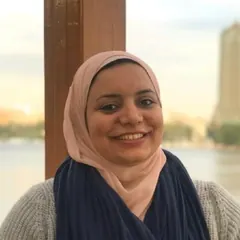
Angham Saeed, Managing Partner at Common Ground Solutions

Angham Saeed

Managing Partner

Angham leads project coordination, research management and stakeholder engagement at CGS. She is responsible for how assignments are planned, documented and communicated, and for keeping delivery aligned across project teams, partners and clients.

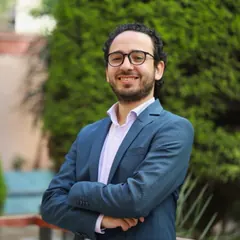
Mohamed Ihab El Gendy, Partner for Economic and Social Development at Common Ground Solutions

Mohamed Ihab El Gendy

Partner, Economic and Social Development

Mohamed is an economic and social development consultant with more than fifteen years in women's economic empowerment, digital inclusion, labour market systems and access to finance. He leads business development, technical assistance and donor-funded programme design, and brings experience in monitoring and learning, financial ecosystem mapping, private sector engagement and capacity building.

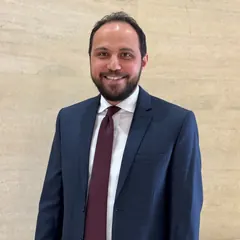
Amr Oraby, Partner for Monitoring, Evaluation, Research and Learning at Common Ground Solutions

Amr Oraby

Partner, Monitoring, Evaluation, Research and Learning

Amr is a MEAL and evaluation specialist with more than eleven years in results-based programming, learning systems and donor-funded development projects. His work spans social development, livelihoods, education and institutional performance, with particular depth in evaluation design, data systems and reporting.

Nadia Magdy, Programme Delivery Director at Common Ground Solutions

Nadia Magdy

Programme Delivery Director

Nadia runs programme operations and implementation, covering coordination, documentation, communication and day-to-day delivery. She is the point at which an assignment plan becomes fieldwork that is organised, responsive and answerable to partners and communities.

Behind the partners is a multidisciplinary core of social scientists, economists, gender specialists, data analysts and field researchers, extended by a trained enumerator network across the governorates where we work.

Who we work for

Every organisation below has commissioned work that is published on this site, grouped by the kind of institution it is.

Bilateral Donor
GIZ (Deutsche Gesellschaft fur Internationale Zusammenarbeit), Embassy of France - Ministry of Foreign Affairs
CSO / Local NGO
Kheir wa Baraka Charity Association
Foundation / Philanthropy
Endeavor Egypt, Sawiris Foundation for Social Development, Om Habiba Foundation Aswan
International NGO
CARE Egypt, Save the Children International (SCI), Plan International Family & Community Organization - Plan International Egypt, Handicap International, People Power Inclusion, ASMAE - Soeur Emmanuelle Association
Private Sector
Tasaheel Finance
UN Agency
International Organization for Migration (IOM), International Labour Organization (ILO)

See the assignments behind these names

Questions we are asked

CGS is a consulting firm working across economic and social development in Egypt. We design programmes, strengthen the organisations that run them, manage delivery, and evaluate what they achieved. Research, monitoring and evaluation is our largest practice and the source of most of our published work, but it sits alongside programme design and support, capacity development, data collection and management, and planning and event management.

Across Greater Cairo, the Delta, the coast and Upper Egypt: Cairo, Giza, Qalyubia, Alexandria, Beheira, Damietta, Matrouh, the Red Sea, Beni Suef, Minya, Assiut, Sohag, Qena, Luxor and Aswan. Fieldwork is conducted in Arabic by enumerators recruited and trained for the specific assignment.

Where a commissioner requires them, evaluations are structured against the OECD/DAC criteria of relevance, coherence, efficiency, effectiveness, impact and sustainability. Otherwise method follows the evaluation question rather than a template: baseline, midline and endline studies, impact evaluations including quasi-experimental designs, tracer studies, needs and market assessments, institutional assessments, lessons-learned studies, feasibility studies, and data protection impact assessments.

Bilateral donors, UN agencies, international NGOs and national foundations working in Egypt. Clients include GIZ, Save the Children, Plan International, CARE Egypt, the International Organization for Migration, the International Labour Organization, the Embassy of France, Handicap International, the Sawiris Foundation for Social Development, Asmae, Endeavor Egypt and Om Habibeh Foundation.

We run it. Instruments are piloted and revised before full deployment, enumerators are trained on the specific instrument they will use rather than a generic module, and quality assurance runs during collection rather than after it - supervision, back-checks and consistency checks while the field is still open, so problems are corrected rather than reported. Clients receive cleaned, analysis-ready datasets with a codebook.

By necessity and proportionality: only what the study needs is collected. For sensitive populations, including refugees, children and survivors of gender-based violence, we apply GDPR-aligned data protection impact assessment protocols, encryption, controlled access and limited retention. CGS has also delivered DPIAs as standalone assignments, including a multi-phase assessment for an education programme serving refugee children in Aswan.

Looking for a partner on your next programme?

Tell us what you need to find out, and we will tell you how we would go about it.

Work with us